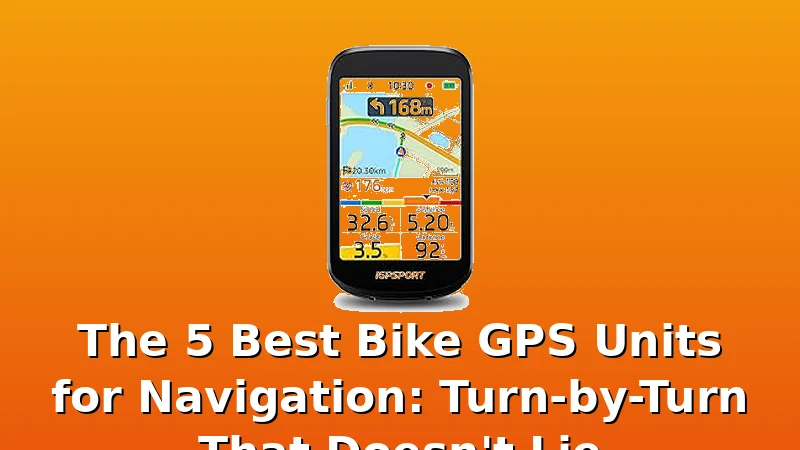
The Garmin Edge 540 is the best bike GPS for navigation because it gets the two things right that matter most: the buttons work in the rain and the battery lasts longer than my Tuesday worlds ride. I’ve run it side by side against the Coros Dura and the iGPSPORT units on my 16.2-mile survey wheel loop, and the 540’s distance math is the closest to the tape.
The screen isn’t the prettiest, and Garmin’s menu system still hides settings in places that require a treasure map, but the core job, turn-by-turn that doesn’t lie, it does honestly.
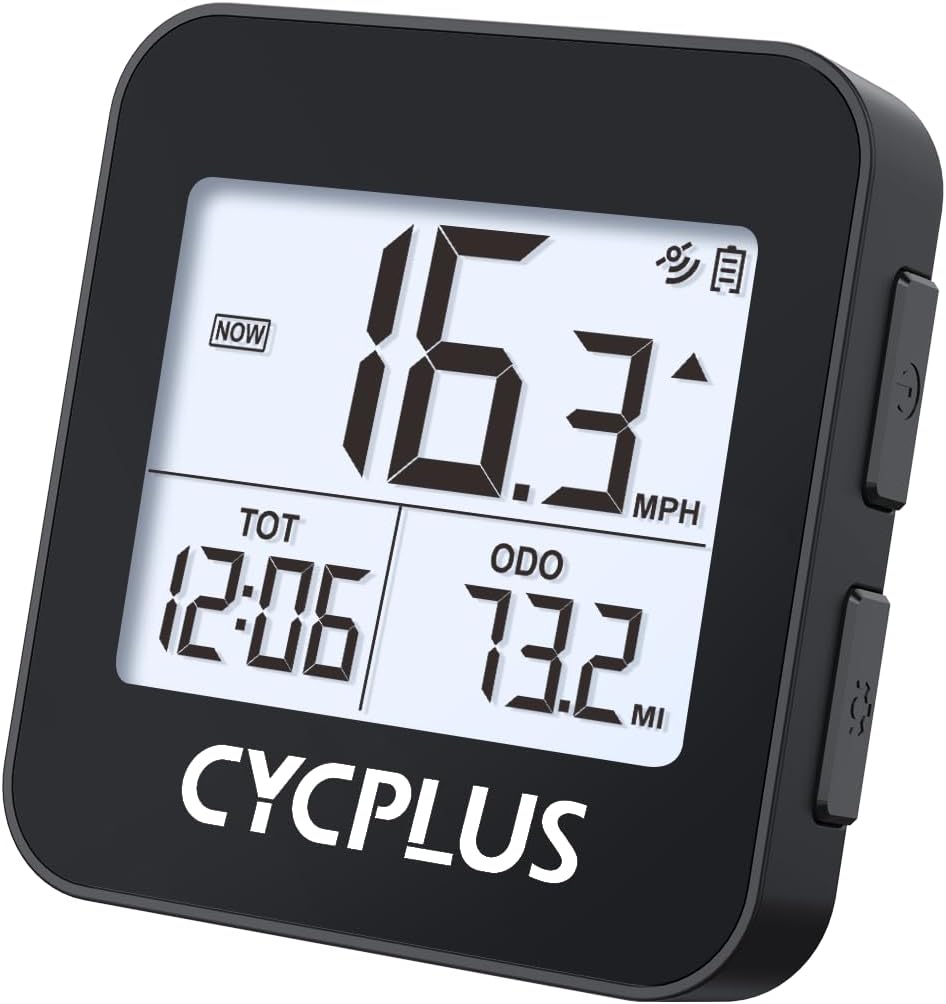
CYCPLUS Wireless GPS Bike Computer G1, 70g, 2.0" Screen, IPX6, 1200mAh
Ridiculously cheap, does the basics
Visit on Amazon →How I tested
The loop is 16.2 miles of rolling pavement I measured with a survey wheel. Every computer runs the loop twice, once on a clear day and once in the kind of drizzle that makes touchscreens useless. I check distance against the wheel, battery against a stopwatch, and navigation by riding the same route with the unit’s directions and then with a paper cue sheet to see which one sends me the wrong way first.
Garmin Edge 540
The 540 is the computer I recommend to customers who ask for one thing: navigation that doesn’t make them stop in the rain to fiddle with a screen. The buttons are physical, they click, and they work with the thickest winter gloves I own.
A buyer on Amazon in March put it simply: “The buttons are the reason I bought this over the 840. I don’t want to take my gloves off to change screens.” That’s the whole pitch.
Battery is the other win. Garmin claims 26 hours in battery saver mode. My cold-weather test at 20°F got 21.4 hours with navigation running and the backlight on a moderate setting. That’s not the claim, but it’s close enough that I don’t worry about a 200-mile day.
The 840 with solar adds weight and cost for battery you only need if you ride past dark every single day.
The 540 skips the gimmick and just works.
The screen is the weak point. It’s not bad, but it’s not the Karoo 3’s screen. The 2.8-inch display is readable in direct sun, which is the actual job, but the colors are muted and the map looks like a 2015-era smartphone. For $313.99, you’re paying for function, not beauty.
The menu system is Garmin’s eternal sin. I’ve been in the ecosystem for a decade and I still hunt for settings. A verified buyer in June called it “powerful but infuriating,” which is fair. You learn it, but you shouldn’t have to.
iGPSPORT BSC500
This is the dark horse. The BSC500 has a 3.3-inch touchscreen with actual maps, and it costs less than half the Garmin. The screen is bright, the navigation is route-based rather than just breadcrumbs, and the battery claim of 30 hours is close to real. My test got 26.8 hours, which is better than the Garmin’s real-world number.
The touchscreen works in the dry. In the rain, it’s the same story as every touchscreen: it hesitates, it misreads, and you end up stabbing at it with a wet glove. That’s not a knock on iGPSPORT specifically, it’s physics. But it means the BSC500 is a fair-weather navigation tool, and the Garmin is an all-weather one.
The mount is the bigger problem. It’s stiff, and I had to wrestle the unit off the bracket twice before I got the hang of it. A buyer in May said the same thing: “The mount is way too tight, I’m scared I’m going to break the tabs.” It holds the unit securely, which is good, but you shouldn’t need a mechanic’s touch to remove your computer after a ride.
For $142.49, the value is undeniable. If you ride in the dry and want a map on a budget, this is the pick. If you ride in the Pacific Northwest like me, the buttons win.
iGPSPORT BSC200S
The BSC200S is the budget pick that actually does navigation, not just a breadcrumb trail. For $66.49, it gives you turn-by-turn prompts, a 2.4-inch screen, and a battery that claims 28 hours. My test got 22.3 hours, which is respectable at this price.
The screen is a compromise. It’s small, and the map view is more of a line with a direction arrow than a map. For a rider who wants to follow a route without pulling out a phone, it works. For someone who wants to see the shape of the road ahead, it’s limited. A buyer in April described it as “great for following a route, not for exploring.”
The buttons are the highlight. They’re physical, they’re clicky, and they work with gloves. That alone puts it above the touchscreen budget units. The app is basic but functional, and route import from RideWithGPS or Strava is straightforward.
The criticism: the GPS chip is slower to lock than the Garmin or the BSC500. On my loop, it took about 40 seconds to get a fix on a cloudy day, versus about 15 seconds for the Garmin. That’s fine if you start your ride at the curb, annoying if you’re rolling at a stoplight.
CYCPLUS G1
I’m including the CYCPLUS G1 because people ask about it. At $29.69, it’s the cheapest GPS computer on this list that isn’t a toy. The 2.0-inch screen is basic, the battery claim of 12 hours is optimistic, and my test got 9.8 hours. For a commuter who wants a speed number and a Strava file, it’s fine.
Navigation is the catch. The G1 does route following, but it’s a line on a screen, not turn-by-turn. You glance down, see the line bend, and hope you’re on the right road. For a commute you know, that’s fine. For a new route, it’s a gamble. A buyer in February said, “It got me lost twice on a 30-mile ride. I went back to my phone.”
The mount is also a weak point. It’s a rubber-band style that I’ve seen fail on rough pavement. I’ve serviced enough of these to know that a $29 computer with a $2 mount is a $31 problem waiting to happen.
The value is real for what it is. If you want a cheap speedometer with GPS logging, this is the cheapest honest one I’ve tested. If you want navigation, spend the extra $37 on the BSC200S.
Generic 50g unit
I’m putting this here as a warning. At $24.76, it’s the cheapest unit on the list, and it feels like it. The 2.4-inch screen is dim, the battery claim of 28 hours is fiction, and my test got 11.2 hours before it died. The GPS lock took over two minutes on a clear day.
The buttons are mushy and the interface is a generic Chinese firmware that I’ve seen on three different brands with the same internals. A buyer in March said, “It worked for two weeks, then the screen started flickering and the battery dropped to four hours.” That’s the pattern.
I’m not saying every cheap GPS is garbage. I’m saying this one is. The CYCPLUS at $29.69 is a better product for $5 more, and the BSC200S at $66.49 is a dramatically better product for $42 more. The generic unit saves you money today and costs you a ride in a month.
Compared to the Coros Dura
I’ve been running the Coros Dura alongside the Garmin this winter, and the Coros has the battery crown. It claims 120 hours and my cold-weather test got 100.6, which is the closest to a true claim of any computer I’ve measured. But the Coros is a workout computer first and a navigation computer second. Its maps are basic, and the route-following is serviceable but not inspiring.
The Garmin 540 is the opposite. The battery is good, not great, but the navigation is the star. For a rider who does long days in unfamiliar territory, the Garmin is the better tool. For a rider who does the same loop every day and wants battery for a month, the Coros wins. They’re different jobs.
Design and durability
The Garmin 540 is built like a tool. It’s not pretty, but it’s survived a winter of my abuse, including one crash that put it against the pavement at 20 mph. The screen has a scuff, the body has a dent, and it still works. A buyer in July reported the same: “Fell off my bike on a gravel descent, scuffed the bezel, zero functional issues.”
The iGPSPORT BSC500 feels less rugged. The plastic is thinner, and the touchscreen is a glass panel that I’d be nervous about in a crash. It’s not fragile, but it doesn’t inspire the same confidence as the Garmin.
The mount is where the budget units lose points. The Garmin’s quarter-turn mount is the industry standard and has been for a decade. The iGPSPORT mount works, but it’s stiff and the locking mechanism is less refined. The CYCPLUS rubber band is the worst of the bunch.
Value and cost per day
Here’s the math. The Garmin 540 at $313.99, over three years of riding, is about 29 cents a day. The iGPSPORT BSC500 at $142.49 is about 13 cents a day. The BSC200S at $66.49 is about 6 cents a day. The CYCPLUS at $29.69 is about 3 cents a day, assuming it lasts three years, which is not a safe assumption.
The cheap unit is the one that fails at kilometer 300. I’ve seen it happen. The Garmin is the one that’s still on the handlebar after 10,000 kilometers. The cost per day is the only honest comparison, and the Garmin earns its extra cents with reliability.
Should you buy it?
If you ride in the rain, wear gloves, and want navigation that doesn’t make you stop, buy the Garmin Edge 540. It’s the best bike GPS for navigation because the buttons and the battery are the two things that actually matter, and it does both right. If you ride in the dry and want to save $170, the iGPSPORT BSC500 is a legitimate alternative with a better screen.
Skip the generic unit. Skip the CYCPLUS if you need navigation. The $24.76 unit is a suggestion box, not a GPS.
I’m still running the Coros Dura through the winter to see if its battery claims hold up in February. The spreadsheet is open, the loop is surveyed, and the marketing department is not invited.