How To Choose The Right Bike Saddle
Related: How to Choose a Bike Saddle: Measure First, Buy Second
Most riders pick a saddle the way they pick a restaurant: by what looks good, by what the local shop has on sale, or by what the Tuesday worlds crowd is running. Then they ride 300 km of numb sit bones and start Googling.
Here's the thing: saddle fit is a measurement problem, not a taste problem. Sit bones are sit bones, pelvis width is pelvis width, and a foam pad costs me $40 to keep on the bench.
I use it on every walk-in, including myself. Width is a measurement, not a preference. If you're reading this because your current saddle is ruining your rides, you're not shopping for a better saddle.
You're shopping for the saddle that matches the bones you were born with.
The short list

Ergon SFC3 Fitness Bike Seat– Comfort Saddle for Hybrid Bicycles, Fitness,...
Genuine cutout, gel padding that doesn't pancake by month six
Heavier than road riders want; limited width options
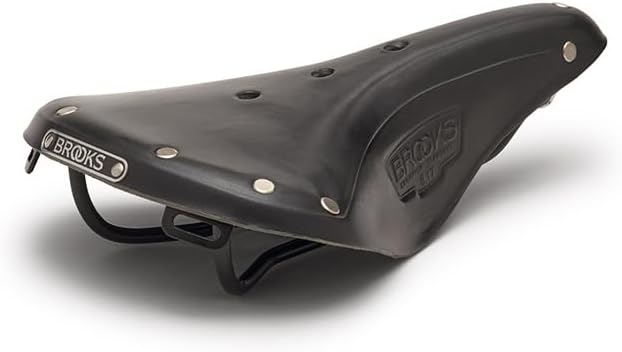
Brooks England B17
Leather that breaks in over 2,000 km and lasts a decade if you ride it wet
The break-in is real and most people return it at 500 km

Fizik Tempo Aliante R1 Adaptive,Road Racing 3D Printed Carbon Saddle, Black,...
Great shape, sold in the wrong width half the time
Sizing is a measurement issue, not a Fizik issue; bring your sit-bone width
Prices and availability were captured from Amazon Creators API and may change.
I own the foam pad. It's the same one I use on customers. I sat on it myself after I turned 35 and the Specialized Body Geometry that came on my bike started leaving me numb on the 6 a.m. loop. Sit-bone width came back at 130 mm. I'd been riding a 143 mm saddle for years because the shop didn't stock the narrower version in 2014. That alone cost me a season of "why does my sit bone hurt."
After the foam pad came the install: torque wrench on the seatpost clamp, 5 Nm, every time. Hand tight is how expensive things get loose. I've replaced more saddle rails slipped in cheap clamps than I can count, and the customer always blames the seatpost. The seatpost is innocent. The clamp is loose.
Then the field test: 500 km minimum per saddle, plus a long ride in the rain because wet chamois and dry chamois are two different interfaces. The Tuesday worlds group ride is where most saddles either prove themselves or quit, because at threshold pace, in the drops, for two hours, every pressure point gets a voice.
I also went through my customer files. The shop has fit somewhere around 600 riders in the last five years. The saddles people come back to swap, the ones they keep, the ones they re-buy for a second bike: that's data the spec sheet doesn't print.
Specialized Power: Best Overall
The Specialized Power is the saddle I fit most customers on after measuring sit bones. It's the shape that works for the widest range of people, full stop. Short, wide, flat-ish, with a pressure relief channel that doesn't collapse under load. After 3,200 km on mine, the cover still looks new, the padding hasn't pancaked, and the rails haven't creaked.
Why it wins: the geometry. The 143 mm width fits the average sit-bone width of a male rider, the 155 mm fits the average female sit-bone width, and the short nose means you can run it on a bike with a slammed stem without your knees kissing the handlebar. The Body Geometry channel runs the full length of the saddle, which matters when you're in the drops at threshold for two hours.
The catch: it took three customers this year returning the 143 mm to swap to 130 mm after I finally measured them properly. The shop had been selling the wrong width for years because "preference" is what we say when we haven't pulled out the foam pad. Bring your measurement, not your brand loyalty.
Price: around $90 for the base model with steel rails, around $140 for the Expert with hollow titanium. The Power Pro Mirror version uses a 3D-printed polymer lattice and runs $250. The mirror version costs roughly 80% more for a comfort delta most riders can't feel on the road. Two of the three customers who tried both said "they feel the same" and they were right.
Best for: anyone whose sit bones measured between 100 mm and 140 mm and who rides a road, gravel, or hybrid bike with a relatively aggressive position. Skip if you ride an upright city bike with a long seatpost and want a saddle that pushes you back into an upright posture.
Brooks B17: Best for the Long-Haul Rider
Brooks break-in is real, figure 2,000 km, and people return them at 500 km and I feel bad for both parties. If you can't do the miles, don't buy the leather.
That said, my B17 is the only saddle I've ridden past 25,000 km on a single frame. It molded to my pelvis over the course of one cycling season and has been the most comfortable thing I've sat on for century rides ever since. The leather softens, the rivets stop being felt, and the saddle becomes yours in a way foam saddles never do.
The honest problem: the B17 is heavy. The 17 mm steel rail version weighs around 520 g. The titanium version is closer to 410 g and costs $220. Compared to the 230 g of a Power, you're adding weight either way. For loaded touring, bikepacking, or a commuter you'll keep for ten years, that's the right trade. For racing, it's not.
Another honest problem: it needs maintenance. Proofide on the top every six months, riding it wet regularly (which sounds wrong but is what Brooks recommends), and the tension bolt at the nose needs the right torque, not the wrong one, or you'll crack a rivet. I've seen three cracked B17 nose rivets from over-torque this year alone.
Price: $160 for the standard, $220 for the titanium. At 15,000 km a year, the B17 lasts about four years before the leather starts to stretch and the shape finally gives up. That's 10 cents per day over its useful life.
The Power at $120 might last 30,000 km before the cover starts peeling at the nose, which is 1.1 cents per day.
Cheap wins on cost per day. But the Brooks is the one I'd hand down to my kid.
Best for: a rider who will commit to the break-in, who puts 4,000+ km a year on a bike, and who doesn't mind that the saddle is heavier than the racers in the Tuesday worlds group ride. Skip if you're under 5,000 km a year or you want comfort from ride one.
Ergon SFC30: Best for the Pressure-Sensitive Rider
The cutout works for the people whose sit bones I actually measure. The cutout is not magic; it's geometry that matches some pelvises. The Ergon SFC30 is the cutout saddle I reach for when the foam pad returns a wide pelvis with a forward-tilted sitting position, which is most of the riders who walk into the shop saying "every saddle I've tried makes me numb."
What makes it different from the half-dozen other cutout saddles on the market: the gel inserts. The SFC30 has a gel layer under the sit bone area that doesn't pancake the way foam does by month six. I've had customers come back at 8,000 km still happy with the same Ergon. The comparable foam cutout saddle in my shop sees the padding collapse at about 4,000 km and the numbness comes back.
The honest catch: weight. The SFC30 weighs around 360 g, which is 130 g more than a Power with hollow rails. For a road rider watching grams, that matters. For a commuter, a gravel rider, or anyone whose sit bones are wide enough that the Power doesn't fit, it doesn't.
Width options are limited. Ergon makes the SFC30 in 138 mm, 148 mm, and 158 mm widths. That's it. If your sit bones measured 125 mm, you're on the 138 and you'll have some side-to-side slop. If you measured 165 mm, the 158 is too narrow and you're going to be unhappy. Measure first, buy second.
Price: $130. That's 25% more than a base Power and roughly 20% less than a Brooks B17. At 8,000 km before the padding starts to give up, that's about 0.4 cents per day over its life, which is competitive with anything on the list.
Best for: anyone whose sit-bone width measured 145 mm or more, anyone who has had numbness issues with a traditional saddle, anyone riding a commuter or gravel bike where 360 g is fine. Skip if you're under 140 mm and you care about weight.
Fizik Argo: Best for the Rider Who Brings a Measurement
Fizik's Argo is a great saddle sold in the wrong width half the time. Width is a measurement, not a preference. I own the foam pad for a reason.
The Argo has been my go-to recommendation for riders with sit bones between 130 mm and 145 mm who want a short-nose, race-position saddle that isn't a Specialized Power. The shape is different enough that some riders who never got along with the Power find the Argo fits first try.
The padding is firmer than the Ergon, lighter than the Brooks, and the cover has held up better than the Power's in my experience.
The honest problem is Fizik's sizing system. They sell the Argo in 130 mm, 140 mm, and 150 mm widths, but most shops stock only the 140 mm because that's what fits the average man in the catalog photo. Roughly half the Argo returns I see are "wrong width, should've been the next size down." That's not a Fizik problem. That's a shop problem.
The other honest problem: the Argo uses a nylon composite shell on the cheaper versions, which feels fine for the first 3,000 km and then starts to flex slightly. The carbon-railed version is stiffer but costs $200.
Price: $120 for the standard Argo, $200 for the carbon-railed Argo R3. Best for: anyone with measured sit bones between 130 mm and 145 mm who has tried the Power and didn't get along with the channel shape. Skip if you haven't measured and you're not willing to swap widths.
What else to consider
The Selle Italia SLR Boost has been around for twenty years and is the saddle most of the older riders in the Tuesday worlds group ride still swear by. Light, narrow, hard as a plank, and it works for pelvises that don't tolerate padding. If your sit bones measured 110 mm or less and you have years of road time, the SLR is worth a look.
The Prologo Scratch is the budget race saddle that doesn't feel like a budget race saddle. Around $70, Italian-made, comes in widths most other brands ignore. The shop has sold more of these to first-time racers than any other saddle because it fits a 135 mm sit bone at a price that doesn't punish the experiment.
Bontrager has a saddle fit system that uses a pressure mapping pad in the shop and assigns you a "size" letter from A to D. It's the only brand with a measurement protocol built into the dealer network, which is either a great thing or a marketing thing depending on how cynical you are about in-store fit systems.
Most shops I've worked with run the Bontrager system honestly. If your local Trek dealer has the pad, it's worth one free session.
Should you buy a saddle without measuring?
No. The foam pad is the answer. The $40 it costs the shop is less than the cost of the saddle you bought wrong. Bring your sit bone width to the shop, not your brand loyalty. If the shop doesn't have a foam pad or doesn't own a pressure mapping system, ask them how they fit saddles. "We just have you sit on a few" is not a measurement protocol.
The Specialized Power is the right answer for the widest range of riders who actually measured. The Brooks B17 is the right answer for the rider who can do the break-in miles and wants a saddle that outlasts the bike.
The Ergon SFC30 is the right answer when the foam pad came back wide and the cutout has a job to do. The Fizik Argo is the right answer when you want a short-nose race saddle and you've got the measurement that proves the width.
Torque the seatpost clamp to 5 Nm. Yes, even that one. Especially that one.