Related: Tubeless Road Tire Setup Without the Mess
Most road cycling gear essentials get bought twice: once at the register, and once when they fail at kilometer 300. I spent twelve years as a mechanic and five as a service manager before opening a one bay shop in Boulder, and the pattern has not changed. Riders replace whatever was marketed hardest and keep whatever was built honestly. The parts that survive are rarely the expensive ones. They are the ones somebody measured.
This guide covers four pieces of road cycling gear that earn a place in the rotation: padded shorts for the long days, a repair stand that does not wobble when you hang a loaded bike on it, a tubeless road tire that holds up to real chip seal, and a bottle that does not taste like last week's sports drink. None of it is glamorous. All of it gets used weekly, which is the only test I trust.
What I look for before anything earns a recommendation
Every product here has to answer four questions. Can I measure it? Does the claim survive the first 100 km? What breaks at 5,000 km, and can I buy a spare part for it? And would I put it on my own bike and ride it at 6 a.m. in February?
That list kills more products than any star rating. A saddle rail that slips in the clamp is not a preference issue, it is a materials and torque issue. A bottle valve that needs two hands is a design failure, not a quirk. A stand that walks across the floor while you are chasing a bottom bracket is a stand you will quietly stop using, and a tool you stop using is a tool you wasted money on.
The measurement habit came out of the shop, because every customer complaint is a measurement problem. Torque specs are printed in the manual for a reason. Sit bone width is a number, not a vibe. The gap between what the box claims and what the product does is the whole review, and I write down what I can measure instead of guessing at the rest.
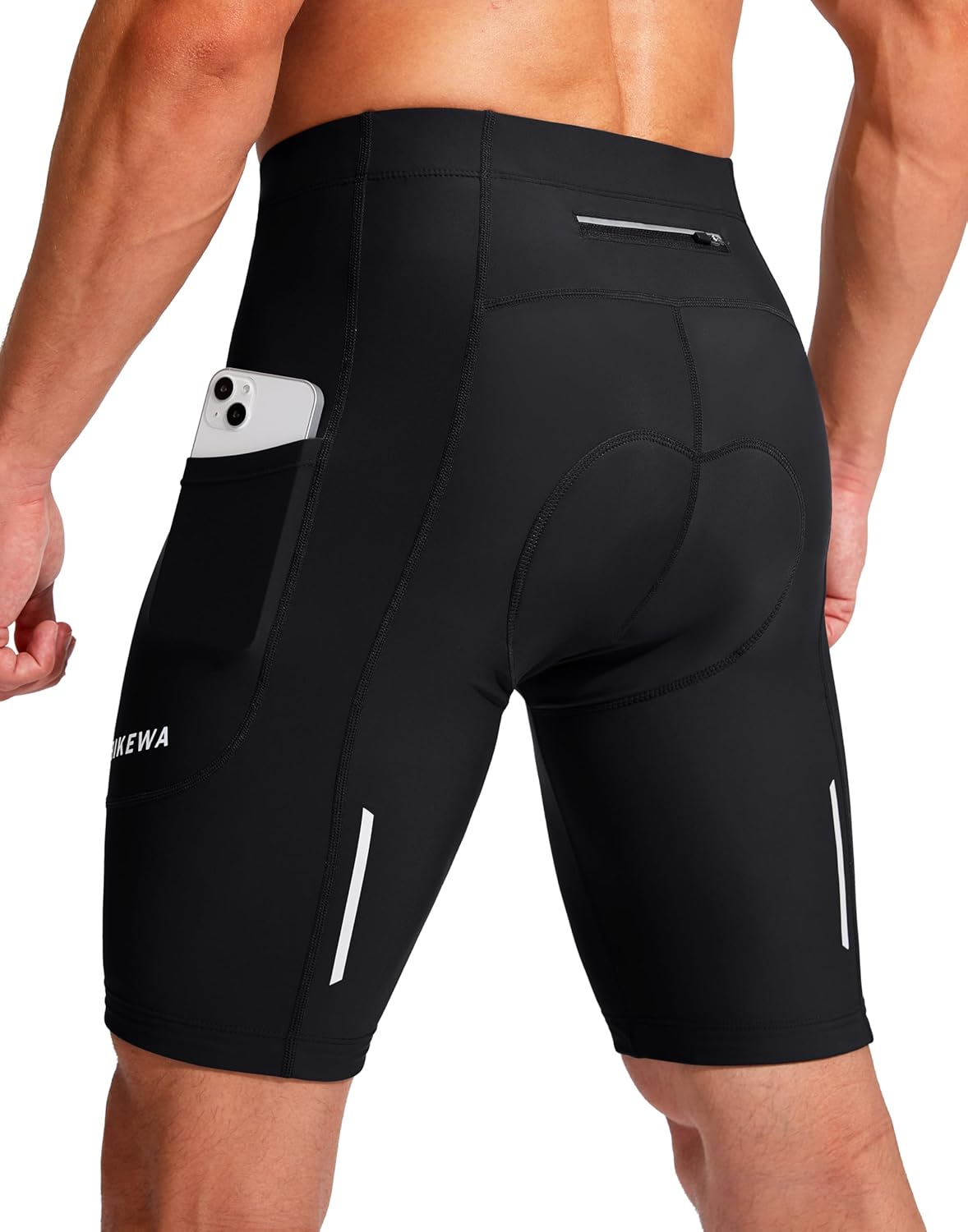
Bikewa Men's Bike Shorts: the padded short that gets the chamois right
Bike shorts live or die at the chamois, and that is where cheap pairs give themselves away. A 3D padded insert that is stitched flat and sits in the right place will carry you through a four hour ride. One that bunches, slides, or holds water after a mid ride shower has you standing on the pedals by hour two, and no amount of chamois cream fixes geometry.
The Bikewa shorts use a 3D padded construction with UPF 50+ fabric and zippered pockets, which matters more than it sounds. Pockets on a cycling short are usually an afterthought that sags the moment you load them. Zippers keep a key and a card from launching themselves onto the shoulder. The fabric is rated for sun exposure, the part most riders underestimate until they are five hours into a July century with no shade.
Fit is where shorts get personal. Measure your waist and your thigh, then size to the tighter of the two numbers. A short that is too loose migrates on the saddle. One that is too tight cuts circulation at the gripper and you feel it at kilometer 60, not kilometer 6. Wash them after every ride, because a chamois pad holds bacteria the way a sponge holds water.
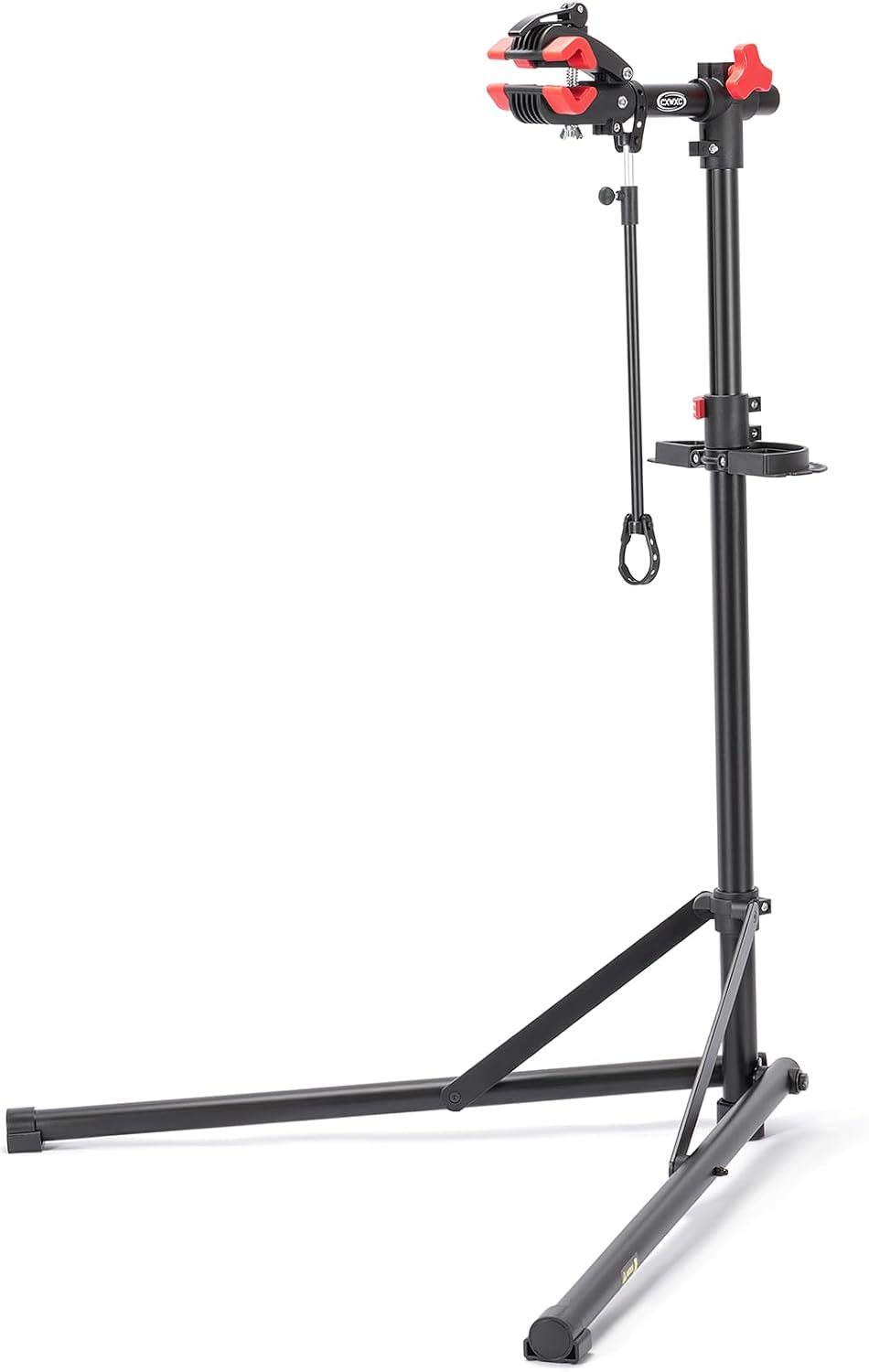
CXWXC Bike Repair Stand: the workstand that decides whether the job happens
A repair stand is the tool that decides whether maintenance happens at all. If setup takes ten minutes and the bike wobbles while you work, the chain gets cleaned less often, the drivetrain wears faster, and the bike gets slower. That is not a tool problem. That is a $200 drivetrain problem caused by skipping a workstand.
What matters on a stand is the clamp and the base. The clamp has to hold a round tube without crushing carbon, which means a padded jaw and a mechanism that tightens gradually instead of snapping shut. The base has to spread wide enough that a loaded bike does not tip when you lean on a pedal to check a bottom bracket. Legs that fold out and lock are worth more than any feature printed on the box.
The CXWXC stand is a maintenance workstand built for home garages and small shops, and the job is simple. Clamp the bike by the seatpost, not the top tube. Raise it to a height where you are not bending over for an hour. Put a tray or a magnet nearby so the small parts do not become floor parts. When you reassemble, torque to spec, because hand tight is how expensive things get loose. The stand does not care what you ride. It only cares whether you use it.
Continental Grand Prix 5000 S TR: the tubeless road tire decision

The Grand Prix 5000 S TR is the tire that made tubeless road riding make sense for riders who were not willing to give up speed. It carries the BlackChili compound, a Vectran breaker under the tread, LazerGrip shoulder construction, and Active Comfort Technology. It also comes as a two pack, which is the honest way to sell tires. You will need both eventually, and buying them one at a time means you always own one tire you cannot trust.
Tubeless is a commitment, not a tire. Setup takes sealant, a valve, and rim tape that is actually the correct width, and the first inflation usually wants a compressor or a charge pump. Do that install at home on a day you are not in a hurry, not in a parking lot twenty minutes before the group ride. Once it is set, a tubeless road tire runs lower pressure, grips better in corners, and seals most punctures before you notice them.
What kills tubeless is neglect. Sealant dries out on its own schedule, and a dried out tire is a tire with no puncture protection and no idea it has a leak. Top up the sealant on a calendar reminder, not on a hunch. Check the tread for cuts after every wet ride. Replace the tire when the wear indicator is gone, not when it starts flatting weekly, because that is how riders end up buying tires at full price in the middle of a season.
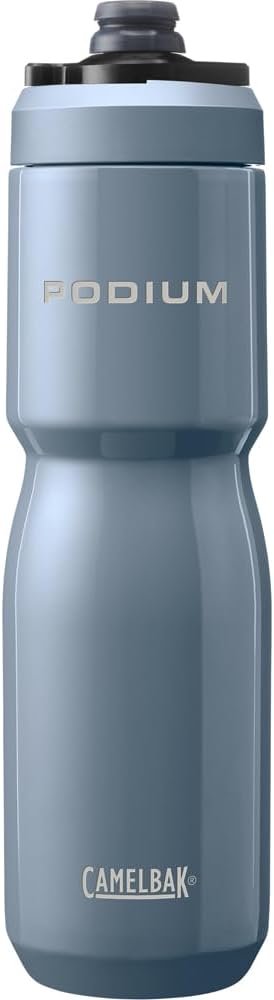
CamelBak Podium Stainless Steel Water Bottle: the end of plastic taste
Bottles are the cheapest thing on the bike and the item riders replace most often, usually because the cheap ones taste like the bottle and grow things you would rather not think about. The CamelBak Podium in stainless steel answers both problems. Stainless does not hold flavor, does not hold odor, and does not scratch into a surface that collects residue the way soft plastic does.
The valve is the part that actually matters. A bottle valve has to open one handed while you hold a line in a group, and it has to close without leaking down your frame for the next twenty miles. The Podium valve is built for exactly that, and the 22 oz size fits a standard cage. Insulation keeps a bottle rideable in July instead of turning it into a warm sports drink experiment.
Steel costs more than plastic and weighs more than plastic. That is the entire trade, and it is a fair one. If you race crits and count grams, buy plastic and buy two. If you ride four hours on a Saturday and want water that tastes like water, steel earns its weight. Clean it with hot water and a bottle brush, and leave it open to dry, because a closed wet bottle is a science project with a deadline.
The reference table: match the item to the job
This is the table I would hand a rider buying one thing at a time. It is not a ranking. It is a job list. Match the item to the job you actually have, check the part that fails first, and ignore the rest of the marketing copy.
| Product | Job it does | What to check first | Verdict |
|---|---|---|---|
 Visit on Amazon → Visit on Amazon →Bikewa padded shorts |
Long rides and hot days | Chamois placement, leg gripper, zipper quality | Buy if you ride over an hour |
 Visit on Amazon → Visit on Amazon →CXWXC repair stand |
Every home repair | Clamp padding, base spread, leg lock | Buy if you own tools |
| <img src="/images/products/B0C7QVZZ7G.jpg" alt="Continental Grand Prix 5000 S TR - Tubeless Road Bike Tire | Fast, Light, Durable - BlackChili, Vectran Breaker, LazerGrip, Active Comfort Technology, 2 Pack" width="340" style="border-radius:8px;max-width:340px;width:340px;height:auto;max-height:420px;object-fit:contain"> Continental GP 5000 S TR |
Fast tubeless road miles | Rim tape width, sealant schedule |
 Visit on Amazon → Visit on Amazon →CamelBak Podium stainless |
Clean tasting water all ride | Valve action, cage fit, drying | Buy if plastic taste bothers you |
The order in that table is the order I would spend money. Tools first, because a stand makes every other job cheaper. Tires second, because they change how the bike feels more than any component you can bolt on. Shorts third, because comfort is what keeps you on the bike long enough to get faster. Bottle last, because it is the cheapest fix on the list and the one you will notice every single ride.
Should you buy the Bikewa shorts?
Yes, if your rides run past an hour. The 3D pad is the reason to buy them, the zippered pockets are the reason to keep them, and the UPF 50+ fabric is the reason your thighs stop cooking in June. Size to your measured waist and thigh, wash them after every ride, and treat the chamois like the piece of equipment it is. It is the cheapest comfort upgrade on a road bike.
Should you buy the CXWXC repair stand?
Yes, if you plan to touch your own bike. A workstand is the difference between maintenance that happens and maintenance you keep meaning to do, and a drivetrain that gets cleaned is a drivetrain that lasts. Clamp by the seatpost, set the height before you start, and torque everything to spec on the way back together. The stand is not the expensive part of that decision. Skipping it is.
Should you buy the Continental Grand Prix 5000 S TR?
Yes, if you are ready for tubeless as a habit rather than a one time install. It is a fast, light road tire with a Vectran breaker and the BlackChili compound, and the two pack means you are not hunting a matching tire mid season. Budget for sealant, a valve, and rim tape, and put a reminder in your phone for the top up. The tire does its job. The maintenance is yours.
Should you buy the CamelBak Podium Stainless Steel bottle?
Yes, if you are tired of water that tastes like the bottle. Stainless does not hold flavor or odor, the valve works one handed, and the 22 oz size drops into a standard cage. It is heavier and it costs more than the plastic version, and for a bottle you refill four times a week, that is a trade worth making. Buy two and rotate them.