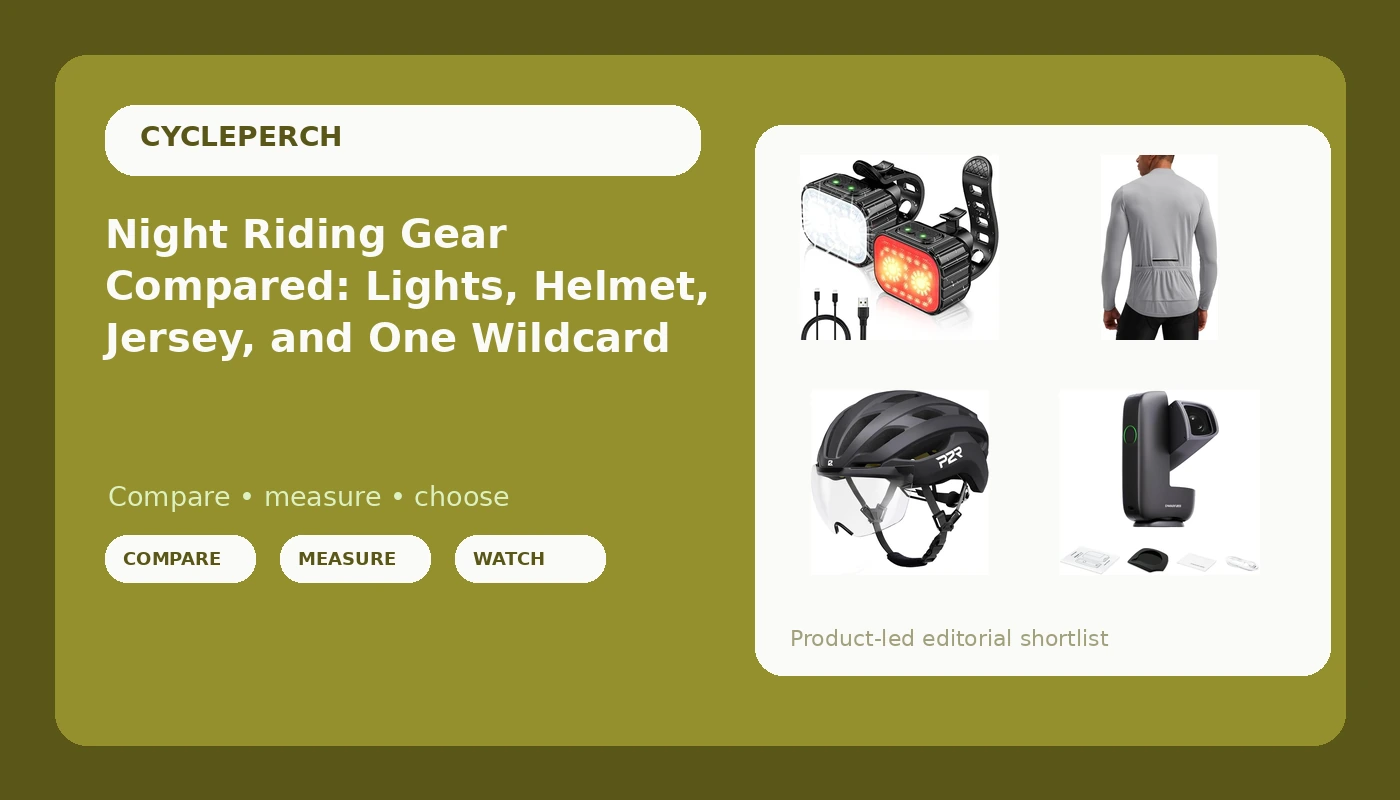
The clock on the shop wall reads 6:40 p.m. in December, and it has already been dark for an hour and a half. That is the reality of night riding for most of us. The ride happens after the shop closes, in the cold, and the headlights of oncoming cars do more to light the road than your own front light does. So when customers ask me what to buy for bike lights and night riding gear, I do not start with the lumen number printed on the box. I start with what I can verify.
This comparison covers four items that ended up in the same cart: a rechargeable front and rear light set, a MIPS helmet with a rear LED, a long sleeve jersey built for sun and sweat, and one item that has no business on a bicycle at all. I will tell you which is which, where each one earns its spot, and where it does not. Affiliate links on this page pay the shop's electric bill. They do not change a verdict, and brands that ask for a nicer one get a shorter review instead.
Related: Bike Light Mounts That Do Not Strip Out
The short answer: the light set is the purchase that changes your odds, the helmet is the purchase that protects you when the light fails, the jersey is a comfort upgrade, and the telescope is a want that I will defend anyway. Everything below is about which of those you actually need first, and what each one costs you in the long run.
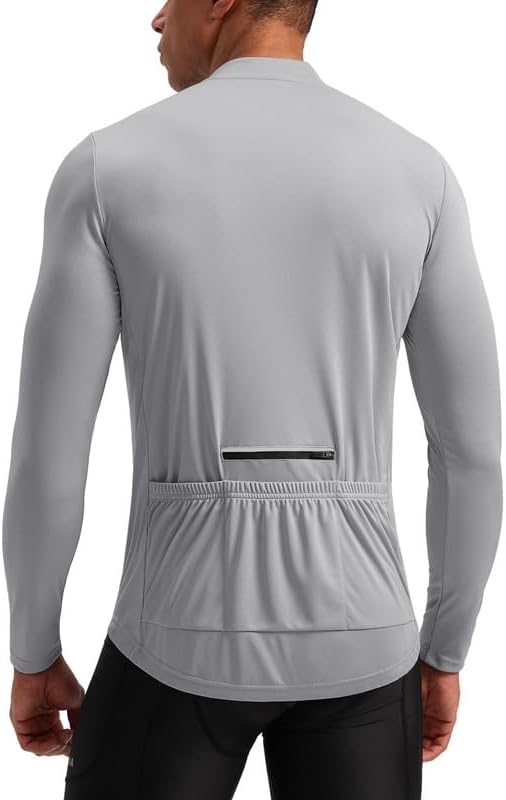
Bikewa Men's Cycling Jersey with 3+1 Rear Zipper Pockets Long Sleeve Moisture Wicking UPF 50+ Half Zip Riding Bike Shirts
3+1 rear zipper pockets, UPF 50+ fabric, long sleeve coverage, half zip you can open on a climb
No wind or water resistance listed, and a long sleeve is a decision you make before you leave the house
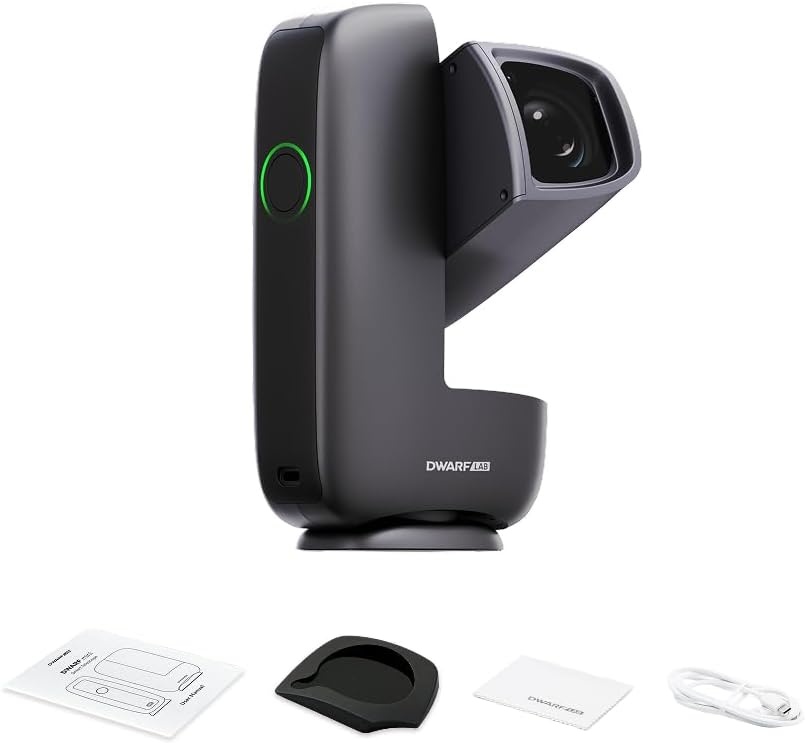
DWARFLAB Dwarf Mini Smart Telescope - 1.85lb Portable Astronomy Telescope
1.85 lb and genuinely packable, which is the whole point for a dark-sky camp
It is not bike gear, and 1.85 lb is a lot of grams to justify in a jersey pocket
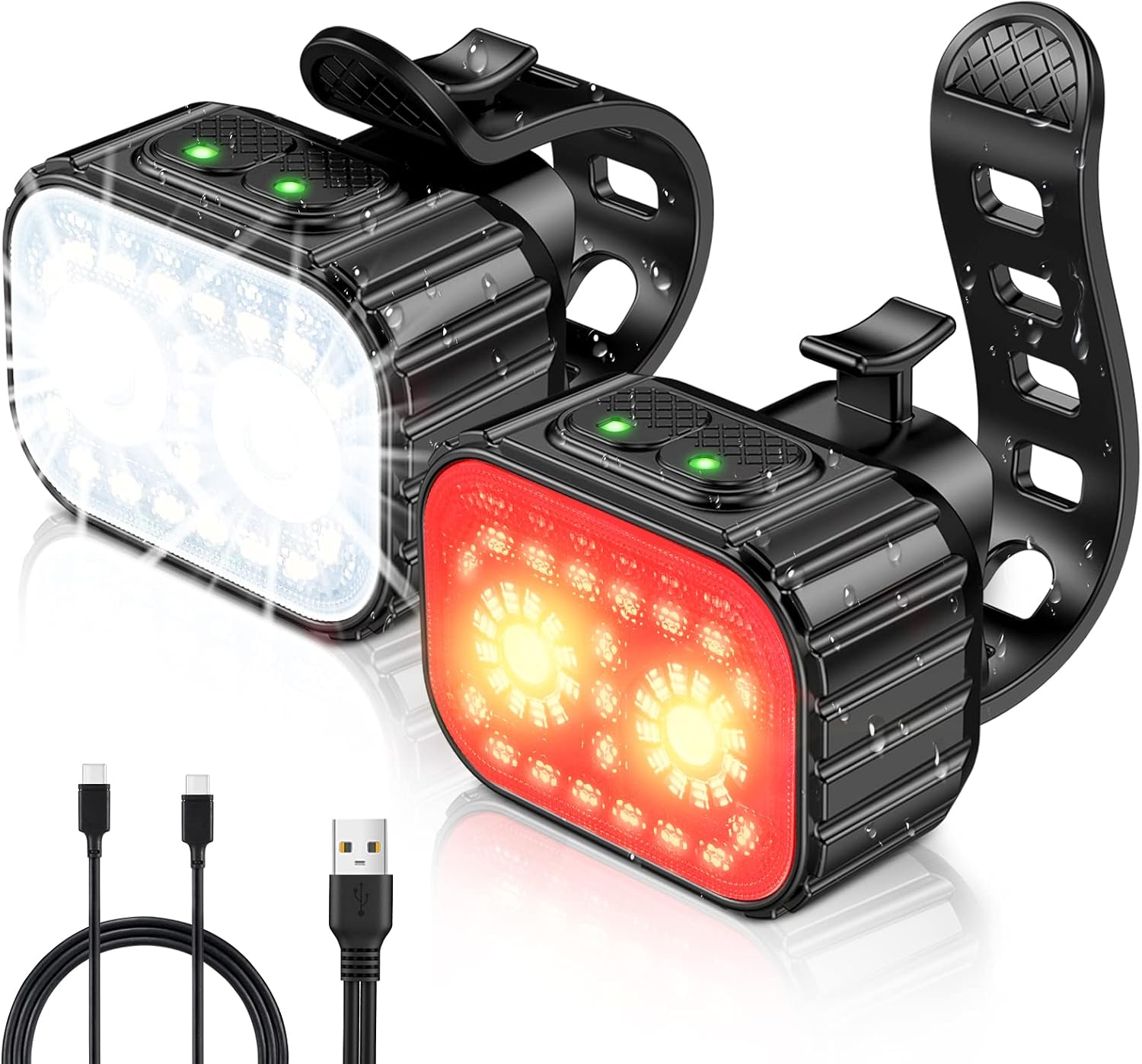
Cuvccn Bike Lights Super Bright, Rechargeable Bicycle Lights Set Multiple Modes, Waterproof Bike Lights for Night Riding/Cycling Safety, Front and Back Bike Reflectors Light, Long Battery Life
Front and rear in one box, rechargeable, multiple modes, priced like a spare tube and a coffee
Sealed battery gives it an expiration date, and "waterproof" is a word I want to see defined
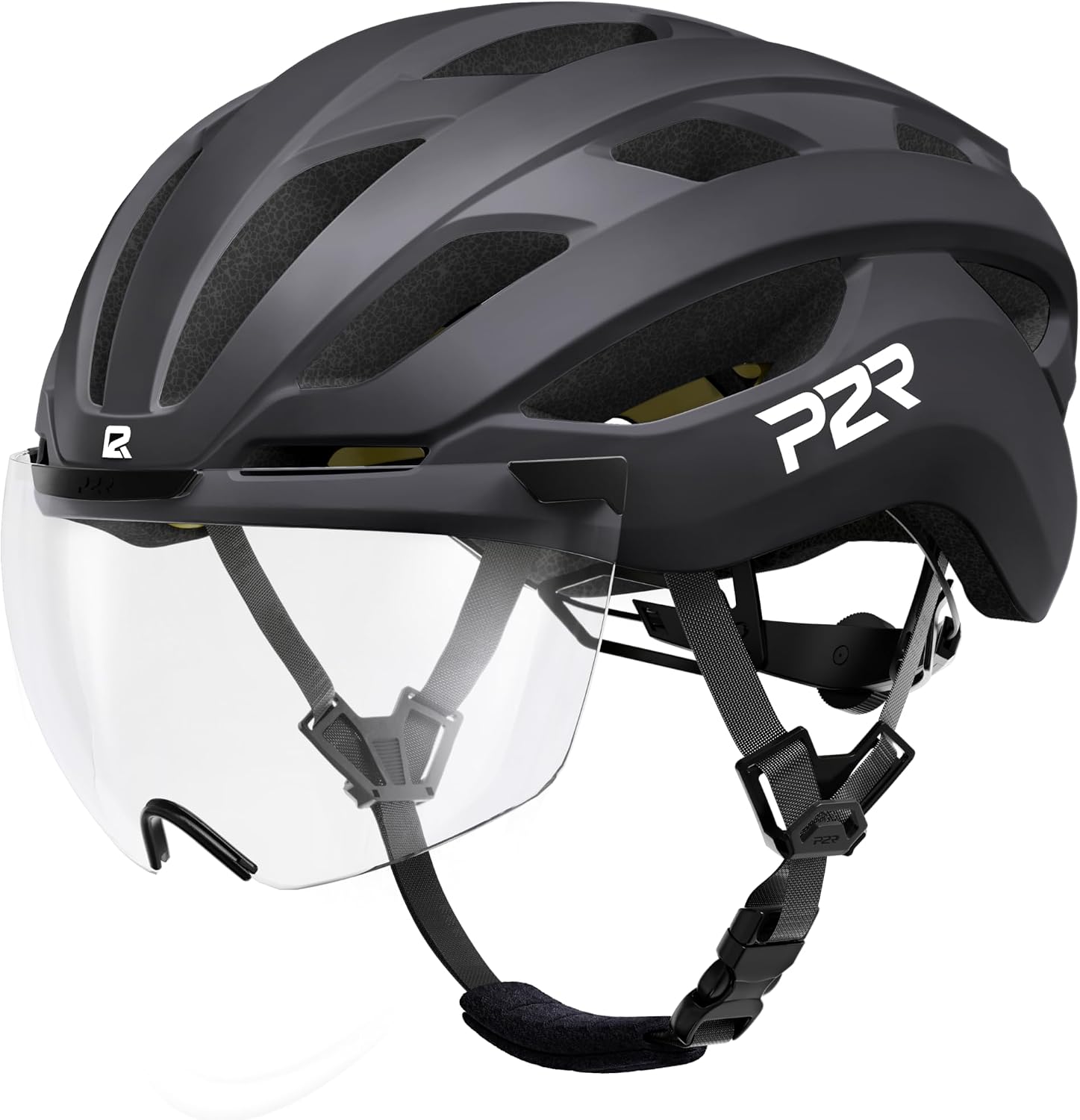
P2R A20 MIPS Bike Helmet for Teens and Adults with Rear LED Light
MIPS rotational protection plus a rear LED, which is two safety systems in one purchase
The rear LED is a supplement, never a replacement for a proper taillight
Prices and availability were captured from Amazon Creators API and may change.
How I judge gear I did not design
Four things decide whether a piece of night gear stays on my shelf or goes back in the box. First, what happens when the battery dies. A product that becomes useless at 20 percent charge is a product with a schedule, and the schedule is not yours. Second, the hardware. Brackets, straps, buckles, and hinges are what fail first, and they fail at the worst possible time. Third, whether the claim has a number behind it. "Super bright" is marketing. "Claimed 1,800 lumens" is at least a claim I can put in the bucket and compare against reality. Fourth, spare parts. A brand that sells you a replacement mount or a rebuild kit keeps a customer. A brand that tells you to buy the whole thing again does not.
My shop standards are simple. No lumen number gets published here without the integrating sphere, which is a five-gallon bucket with flat white paint and a lux meter. No GPS accuracy claim gets made without the 16.2-mile surveyed loop. No saddle fit advice gets given without measuring sit bones on the foam pad. I do not own a bench full of every product I write about, so I separate two categories clearly: what I have measured, and what the spec sheet says. This article is mostly the second category, and I will flag it where it matters.
The light set: Cuvccn Bike Lights
A light set has one job at night and a different job at dusk. At night, the front light has to let you see the road, which is a beam pattern problem more than a brightness problem. At dusk, the rear light has to let other people see you, which is a flash pattern and mounting height problem. The Cuvccn set covers both ends of the bike in one box, which is the right way to sell lights to someone who does not already own a pair.
What I like about the shape of this product: it is rechargeable, it lists multiple modes, it includes a reflector element, and the whole set costs less than most single front lights I recommend. That last part matters more than people admit. The most common failure I see is not a light that is too dim, it is a light sitting in a drawer because the rider forgot to charge it or lost the bracket.
What I would want to know before putting it on my own bar: how the charge port is sealed, because "waterproof" and "water resistant" are different promises and the port is where water gets in. How the mount attaches, because a plastic bracket that strips its threads turns a working light into a paperweight. And whether the battery is replaceable. A sealed battery on a cheap light is a fair trade. A sealed battery on an expensive light is a countdown timer with a beam pattern.
The helmet: P2R A20 MIPS with rear LED
Helmets are the one category where I stop being clever. Fit is the only feature that matters, and fit is a measurement, not a preference. The P2R A20 uses MIPS, which is a low-friction layer designed to let the shell rotate slightly against your head during an angled impact. It is one of the few safety technologies in cycling that has real lab work behind it, and it is worth having.
The rear LED is the interesting part. A light mounted high on a helmet sits above the sightline of a driver, which means it gets noticed earlier than a seatpost light in traffic. What it does not do is replace a taillight. LEDs on helmets tend to be small, and small lights are supplements. I would run this helmet and a proper rear light together, which is exactly what the light set above is for.
Two things to check before you buy any helmet. First, the retention dial: put it on, tighten it, and shake your head. If the shell moves independently of your scalp, the fit is wrong regardless of the size on the box. Second, the straps: a helmet with a buckle that will not stay adjusted is a helmet you will wear loose, and a loose helmet is barely better than no helmet. And when you do go down and hit it, the shell is done. That is the deal with helmets.
The jersey: Bikewa long sleeve
The Bikewa jersey is the least glamorous item here and probably the one most people should buy. Long sleeve, UPF 50+ fabric, moisture wicking, half zip, and a pocket layout of 3+1 with zippers on the rear. Those are the numbers that matter on a jersey, and they are all listed.
Let me translate them. UPF 50+ is a fabric rating, which means the material itself blocks most UV. That matters more on a bike than in most sports, because you sit in the sun for hours without noticing. A long sleeve in July sounds insane until you ride at altitude in Colorado, where the sun does not care that it is only 68 degrees. A half zip is a real compromise: it vents heat on a climb, but it does not open as far as a full zip, so it is the right call for cool mornings and the wrong call for a hot century.
The 3+1 pocket layout is the detail I would check first. Three rear pockets plus a zippered one is the standard that works, and the zipper is where you put keys and a phone so they do not launch on a pothole. What I want to know is sag: load all four pockets with a full bottle, a phone, and a tube, then ride. Cheap jerseys droop, and a drooping pocket is a jersey that slaps your lower back for three hours.
The wildcard: DWARFLAB Dwarf Mini
This one is not bike gear. I am not going to pretend otherwise, and I am not going to bend the article to make it fit. The DWARFLAB Dwarf Mini is a 1.85 lb portable smart telescope, and it is in this comparison because it was in the same cart, and because there is a real overlap between people who ride bikes at night and people who stop somewhere dark and look up.
Where it makes sense: bikepacking. If you camp under a genuinely dark sky, a telescope that weighs less than two bottles is a packable luxury, and the smart part means it points and tracks without you learning the sky first. Where it makes no sense: anything on a bicycle, unless you have decided that 1.85 lb is worth carrying up a pass for the view at the top. That is a personal math problem and I respect either answer.
Full honesty on my side: this has not been on my bench, and it is far outside the categories I measure. I do not have a bucket or a loop for optics. So treat this as a what the record says entry, not a verdict from the shop. If you want the honest version of my position: buy the lights and the helmet first, and put the telescope on the list for the trip where you actually camp.
The trade-offs, stated plainly
Every item here costs you something that is not money.
The Cuvccn light set is the cheapest path to being visible, and the trade-off is that cheap lights tend to have sealed batteries and plastic brackets. If you charge it every ride and treat the mount gently, that math works. If you want a light that survives five winters, you pay for a brand that sells you spare parts.
The P2R A20 gives you MIPS and a rear LED for less than most MIPS helmets, and the trade-off is that you still need a real taillight. Budget for both, not one.
The Bikewa jersey is a long sleeve in a short sleeve world, and the trade-off is temperature. It is the right purchase for sun protection and cool mornings, and the wrong purchase if you only ride in the heat of the afternoon.
The DWARFLAB Dwarf Mini is the best example in this article of a want dressed as a need. It is genuinely portable at 1.85 lb, and it is still not something you carry on a training ride.
Which one for which rider
If you ride before 7 a.m. or after 6 p.m. on roads with traffic, buy the light set and the helmet in the same order. Visibility and protection are not upgrades, they are entry fees, and this pair covers both ends of the bike for a fraction of what a single premium front light costs.
If you commute in daylight and your only dark riding is the shoulder seasons, the jersey moves up the list. Sun protection on a long ride is a real performance issue, and a long sleeve with UPF 50+ is cheaper than the dermatologist appointment you are deferring.
If you are buying for a teenager, the helmet matters most, because teenagers ride with friends and ride later than they said they would. A rear LED on the helmet is a small feature that gets noticed in a driveway at 9 p.m.
If you bikepack and camp, the telescope is a legitimate fourth item, and the 1.85 lb figure is the number that decides whether it goes in the bag. Everything I said about that one stands.
The order I would buy them in
Lights first. Being seen is the highest return per dollar in cycling, and the Cuvccn set is the cheapest honest way to get a front and rear on the bike today. Helmet second, because the light can fail and the helmet does not need a battery. Jersey third, because it is comfort and sun protection rather than safety. Telescope last, and only for the rider who already has the first three and camps somewhere the sky is actually dark.
That is the whole comparison. None of these four items is a bad purchase. They just do not have equal urgency, and the shop sees the difference every winter when someone walks in with a dim light and a helmet that has been sitting in a garage for six years. Buy the two that keep you visible and protected, then spend the rest of the budget on the things that make the ride worth doing after dark.