Related: How to Aim Bike Lights So Drivers Actually See You
Night gear fails in a predictable order. The mount goes first, then the charge port, then the battery, and only then does anyone admit the number printed on the box was fiction. I spent twelve years as a mechanic and the last five as a service manager, and the same three complaints walk through the door every winter: my light died, my tire was soft, my phone camera rattles. That is why this bike lights and mini pump guide exists.
I write about gear the way I work on bikes: measure what you can, and write down what you cannot. The bucket, my integrating sphere made from a five gallon pail and a lux meter, tells the truth about lumen claims. The survey wheel measured loop tells the truth about GPS. Here is the honest part: I judge these four products on their construction, their specs, and the failure patterns I have seen in this category for two decades, not on a lab session I did not run. You deserve to know which is which.
What you actually need after dark is smaller than the market wants you to believe. A front light you can see with, a rear light a driver can see, air you can add without a floor pump, and a mount that does not shake your phone apart. Everything else is a mode you will never press.
The Bigger Set: Victoper 10 LED Bike Light
This is the fuller of the two Victoper sets: a front unit and a rear unit, USB rechargeable, with eight front modes and nine rear modes listed. Start with what a mode count is. It is a feature list, not an output number. Ten LEDs is a construction detail. I have never met a rider who used more than three of those modes, and the three that earn their place are a steady beam for the unlit stretch, a pulse for daylight visibility, and a low steady for the block where you do not want to blind oncoming riders.
The rechargeable part is where my bias shows. A sealed battery means the light has an expiration date, and the date is not yours to choose. That is the trade you make for not buying cells every month. Since the battery is not replaceable, buy the set that gives you the most runtime on the mode you will actually run, not the mode with the biggest claimed number on the side of the box.
Waterproof on a light like this means the housing survives weather, not that the charge port flap survives you leaving it ajar. The gasket at the port is the failure point I have seen most often across every brand in this category. Wipe it, seat it, and do not charge a wet light in a cold garage.
The Leaner Set: Victoper Bike Light, 6+4 Modes
Same idea, fewer modes: six up front and four in the rear. Fewer modes is not automatically worse. A shorter mode list usually means a simpler switch sequence, and a simpler switch sequence means you can find the mode you want with cold hands and gloves on. That is not a small thing in February.
The honest way to choose between these two sets is not to compare the LED counts. It is to decide which bike gets which set. Put the set with more modes and the longer mode list on the bike you ride in the dark on purpose, and put the simpler set on the bike you ride home from the coffee shop or the train station. Both are front and rear sets, so both cover the legal minimum in most places, and both leave you one battery away from being invisible.
One set per bike is the rule I would give anyone. Moving a light between two bikes is how mounts get lost and how you end up riding home with the light in your jacket pocket because you were in a hurry.
The Air: Mini Bike Tire Pump with Digital Gauge
This one is rated to 120 PSI with a digital gauge, an auto stop, and a claimed 20 second fill, and it handles both Presta and Schrader valves. The valve compatibility is the feature that makes it a household tool instead of a road bike tool. Presta covers your road and gravel bikes, Schrader covers the kids' bikes, the e-bike, the scooter, and the car tires you will absolutely try next.
The auto stop is only as good as the gauge it is reading, and the gauge is the part I would check first. Shop gauges get calibrated or they get replaced. A pump gauge is a convenience, so treat the number as close enough, not gospel. If you run road tires at 95 to 100 PSI, you already know why an electric pump beats a hand pump. Hand pumping a road tire to 100 PSI is a workout you did not sign up for, and the last ten PSI take longer than the first eighty.
This is not a floor pump and it does not replace one. It is the pump in the bag, the one that turns a slow leak at kilometer 30 into a two minute stop instead of a phone call. Two habits make it work: charge it before a long ride, and remember that a cold battery holds less than a warm one. Winter tests on every battery product I own confirm the same thing, so plan for less range in January than you got in July.
The Mount: Lamicall Bike and Motorcycle Phone Mount
The Lamicall mount is a clamp style holder with a vibration dampener built in. The dampener is the whole reason this category exists, and it is worth explaining why. Modern phones stabilize video and photos with a tiny moving mechanism inside the camera. Handlebar vibration is brutal on that mechanism, and the camera is usually the first thing to fail on a phone that lives on a bike. A dampened mount is cheap insurance against a repair that costs more than the phone mount, the pump, and both light sets combined.
Two things to check on any clamp mount before you trust it. First, the clamp body material and how much force it takes to open, because a plastic clamp that flexes will loosen over a season of potholes. Second, whether the jaws land on your phone's buttons or the case lip, because a mount that presses a power button is a mount that reboots your phone at kilometer 12.
The mount is not the whole system. A case that fits poorly inside the jaws is how phones end up on the pavement, and no dampener fixes a bad case. And a clamp mount is not the same as a rubber strap mount, which is a suggestion box for gravity. I have seen the aftermath of both, and only one of them involved a phone that still worked.
How I judge gear like this
Every product in this category gets judged the same way, and the order matters. Can I measure it? Lumens go in the bucket, tire pressure goes against a shop gauge, chain wear goes to the checker, and anything I cannot measure I write down as a claim instead of a fact. Does the claim survive the first 100 kilometers? What breaks at 5,000 kilometers, and can I buy the part? Is the battery replaceable, or does the product come with an expiration date? How many shop rate hours does installation eat, because a product that needs an hour of fiddling is not a cheap product.
For lights specifically, the gap between the box and the bucket is the review. Claims run high across this whole category, and the mystery brand tier is where the gap gets widest. That does not make a light useless. It makes it a light you buy for the price and the mount, not for the number on the box.
For pumps, the gauge and the valve head are the two things that decide whether you keep it. For mounts, the clamp and the dampener are the two things that decide whether your phone survives.
What the specs actually tell you
Mode counts are the least useful number on any light listing. Runtime on the mode you will actually use is the number that matters, and it is usually the number buried in the smallest print. A light that runs four hours on low is more useful to a commuter than a light that runs forty minutes on turbo.
Rechargeable means sealed, and sealed means the light is a consumable. That is the trade, and it is worth making at this price level, but it should be a decision instead of a surprise. Buy two sets, keep one charged, and rotate them.
The pump's 120 PSI rating covers every tire on the property. Its real value is the digital gauge and the auto stop, which turn pumping into a set and forget task rather than a guess. The 20 second claim is a claim until you have timed it, so treat it as a target and not a promise, and expect a cold battery to be slower.
The mount's dampener is the one feature on this list that protects something more expensive than itself. That is a rare thing in cycling gear, and it is the reason I would not run a rigid mount on a bike with an expensive phone on it.
The night riding kit reference table
| Product | The job it does | Modes | Valve or mount | Price |
|---|---|---|---|---|
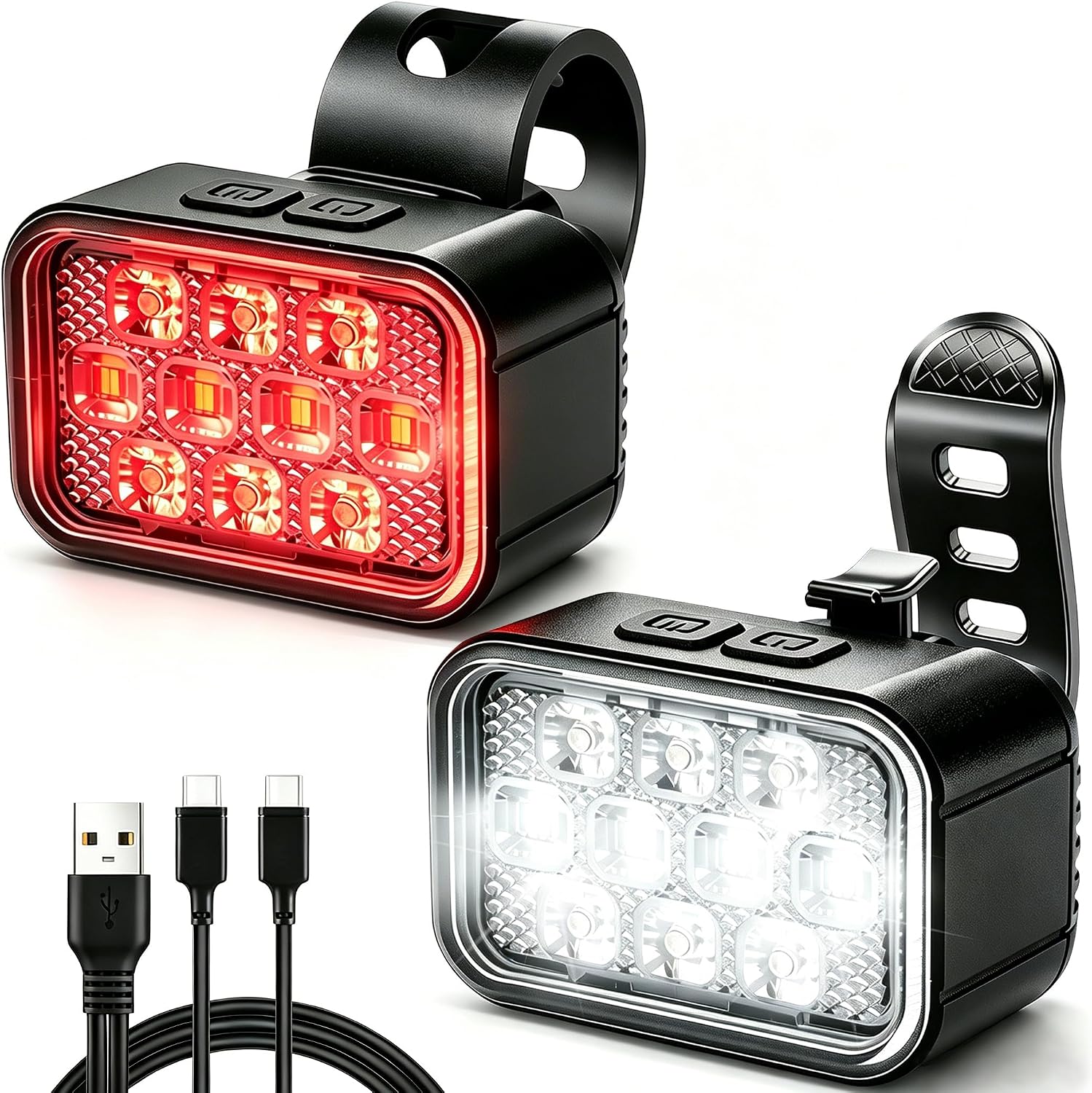 Visit on Amazon → Visit on Amazon →Victoper 10 LED Bike Light, front and rear set |
See and be seen on the bike you ride in the dark on purpose | 8 front, 9 rear | USB rechargeable, handlebar and seatpost | $13.99 |
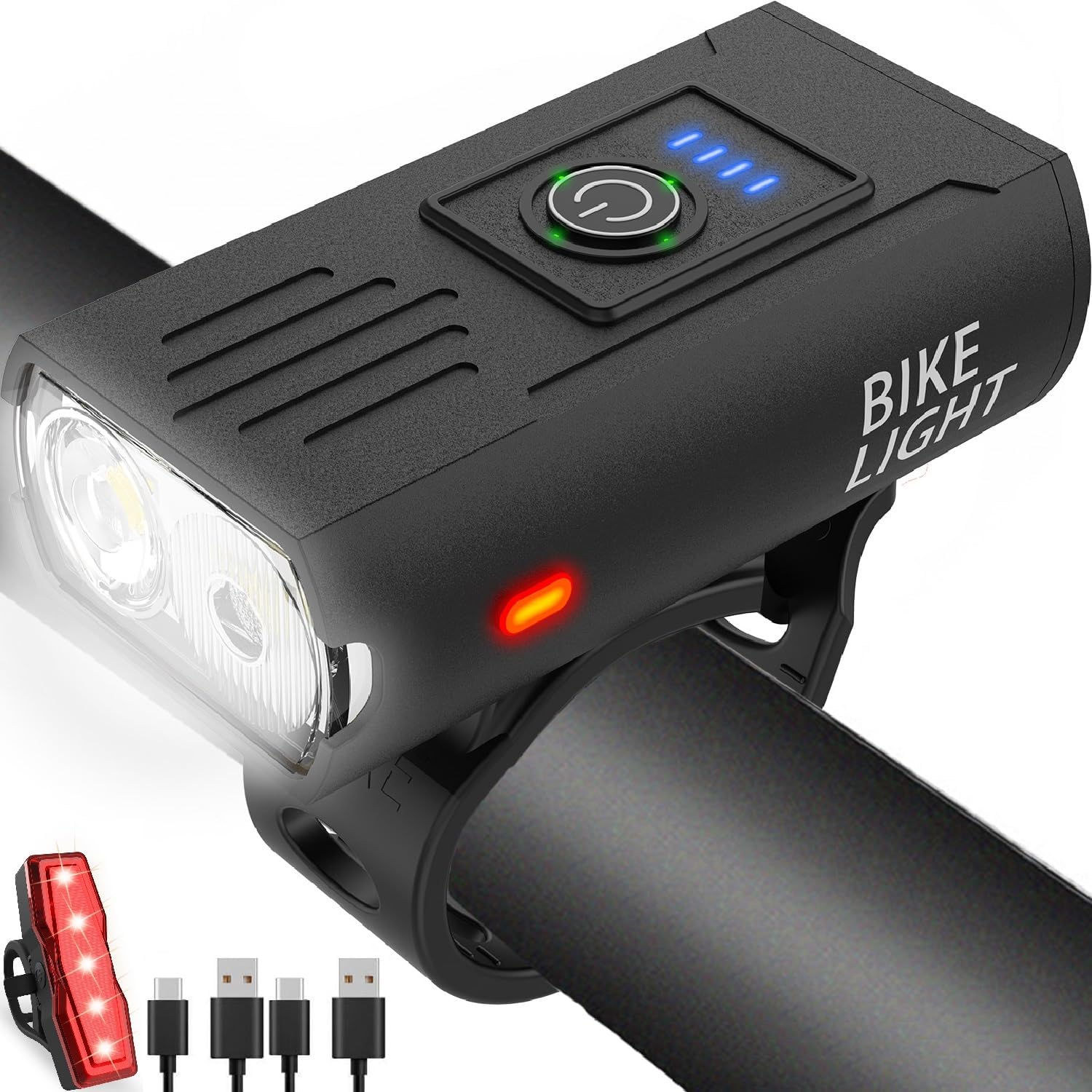 Visit on Amazon → Visit on Amazon →Victoper Bike Light, front and rear set |
The simpler set for the second bike or the short commute | 6 front, 4 rear | USB rechargeable, handlebar and seatpost | $13.49 |
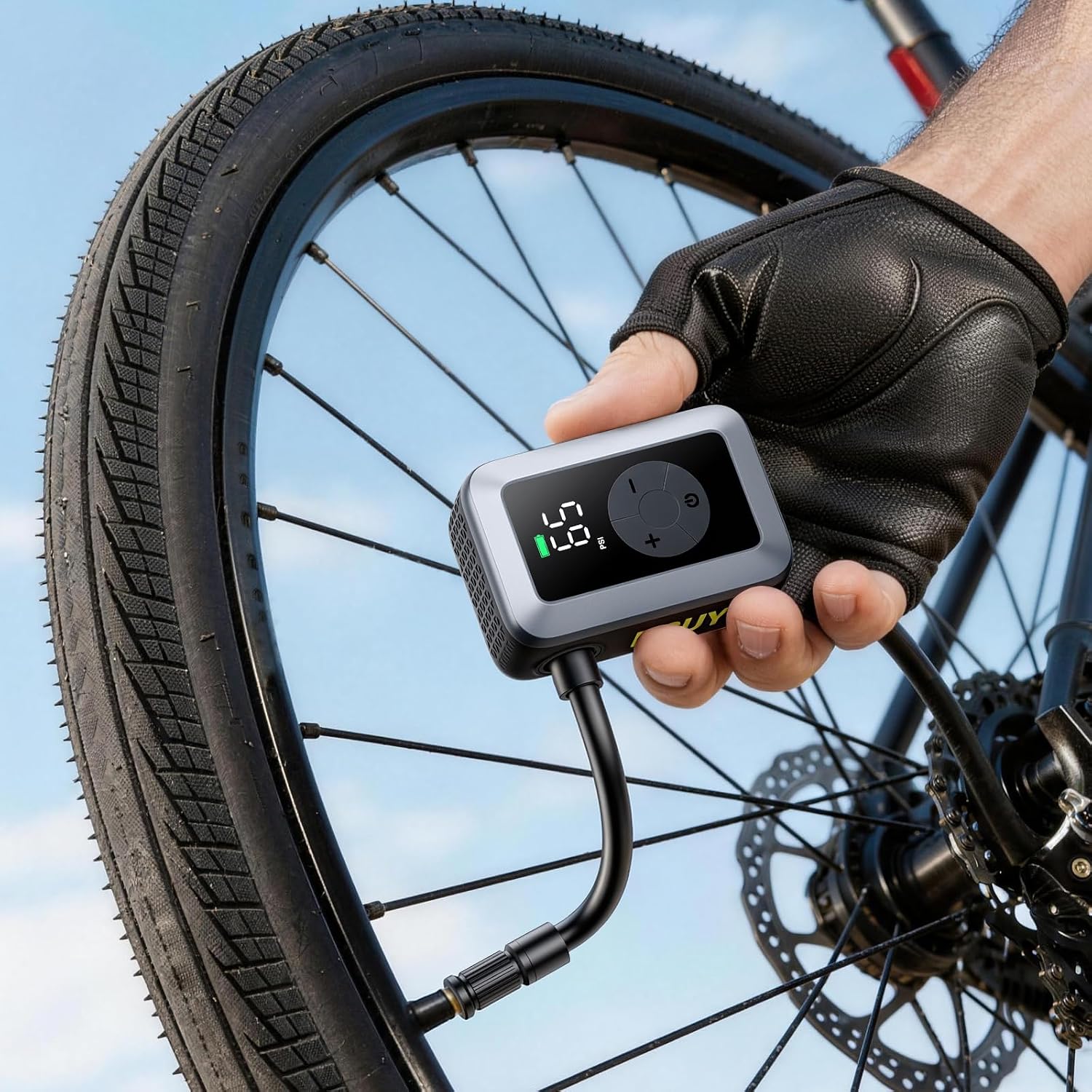 Visit on Amazon → Visit on Amazon →Mini Bike Tire Pump with digital gauge |
Air without the arm workout, at home or on the ride | Not applicable | Presta and Schrader, 120 PSI rated | $56.99 |
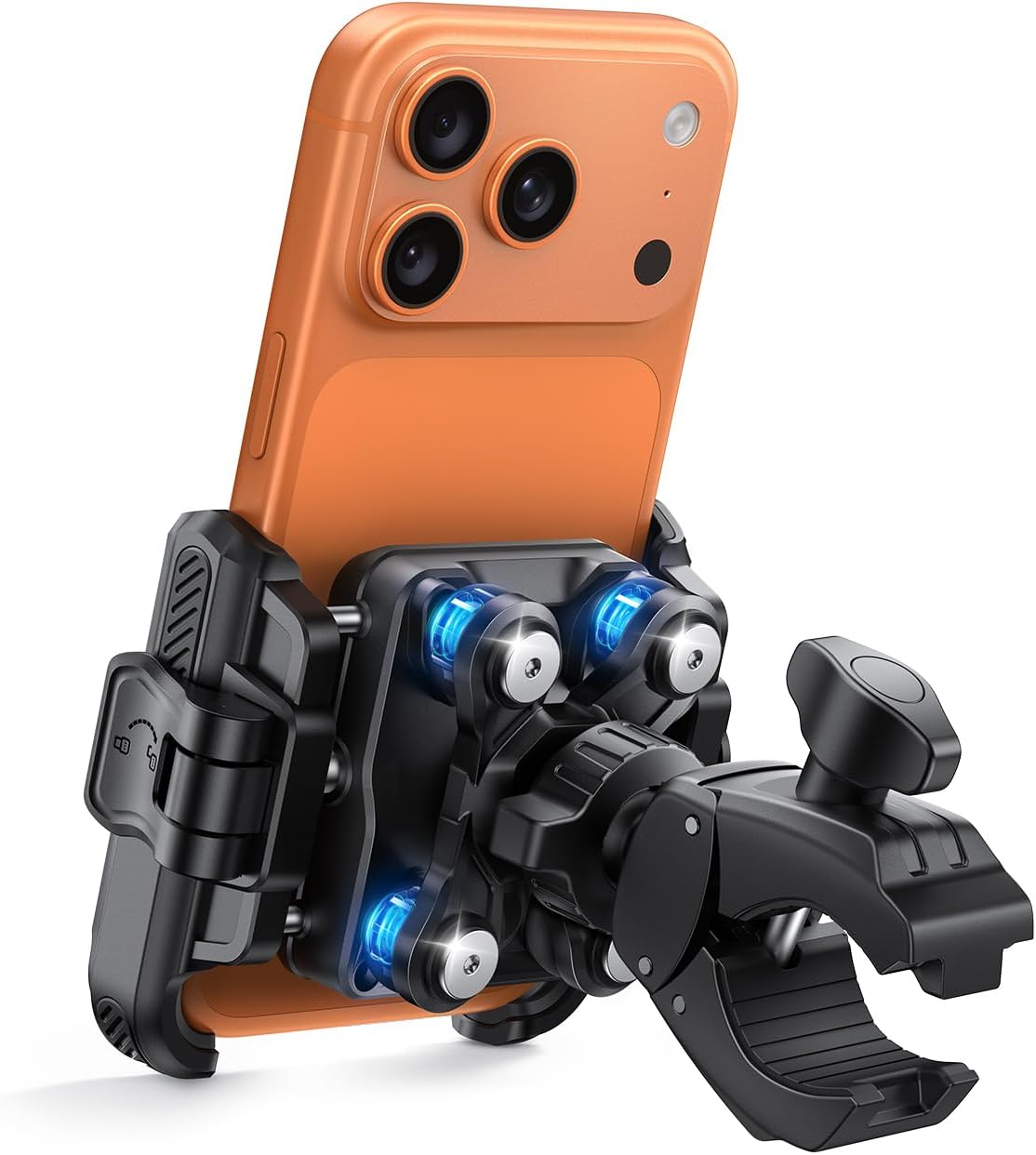 Visit on Amazon → Visit on Amazon →Lamicall Phone Mount with vibration dampener |
Hold the phone without shaking the camera apart | Not applicable | Clamp mount, dampened | $23.99 |
The pattern in the table is deliberate. Two light sets because one set per bike is cheaper than one set plus a lost mount. One pump because it covers every valve in the house. One dampened mount because the phone costs more than everything else on the list.
Should you buy the Victoper 10 LED Bike Light?
Yes, if you want the fuller of the two sets on the bike you ride in the dark on purpose. The mode list is longer than you need, the LEDs are a construction detail, and none of that is the point. The point is a front and rear set that charges over USB, mounts on the handlebar and seatpost, and gives you a pulse mode for daylight and a steady mode for the unlit stretch. Check the charge port gasket and treat the sealed battery as a consumable, because it is one.
Should you buy the Victoper Bike Light with 6+4 Modes?
Yes, as the second set. Fewer modes means an easier switch sequence with gloves on, and the simpler set belongs on the bike you ride short distances or leave parked. If you only own one bike, buy the fuller set and keep this one as the backup you rotate in. A spare charged set in the bag is worth more than any claimed output number.
Should you buy the Mini Bike Tire Pump?
Yes, if you run road pressures or you are tired of hand pumping. The digital gauge and the auto stop are the features that matter, the Presta and Schrader compatibility is what makes it useful for the whole household, and the 120 PSI rating covers everything from a road tire to a scooter. Keep a floor pump at home for the weekly check, and keep this one charged in the bag for the day the gauge on the wall is a mile behind you.
Should you buy the Lamicall Phone Mount?
Yes, if your phone goes on the bars and it has a camera you care about. The vibration dampener is the reason to buy this instead of a rigid clamp, and the clamp body is the thing to inspect before you trust it with a screen. Pair it with a case that fits the jaws properly. The mount protects the phone, but only the case keeps it off the pavement.